The Full Story of Padel Sport

Born in a Backyard,
Beloved by Millions

How a wealthy Mexican businessman walled off part of his garden in 1969
and inadvertently launched the fastest-growing racket sport on earth — a
story of improvisation, passion, and one continent’s extraordinary love
affair with a ball and two walls.

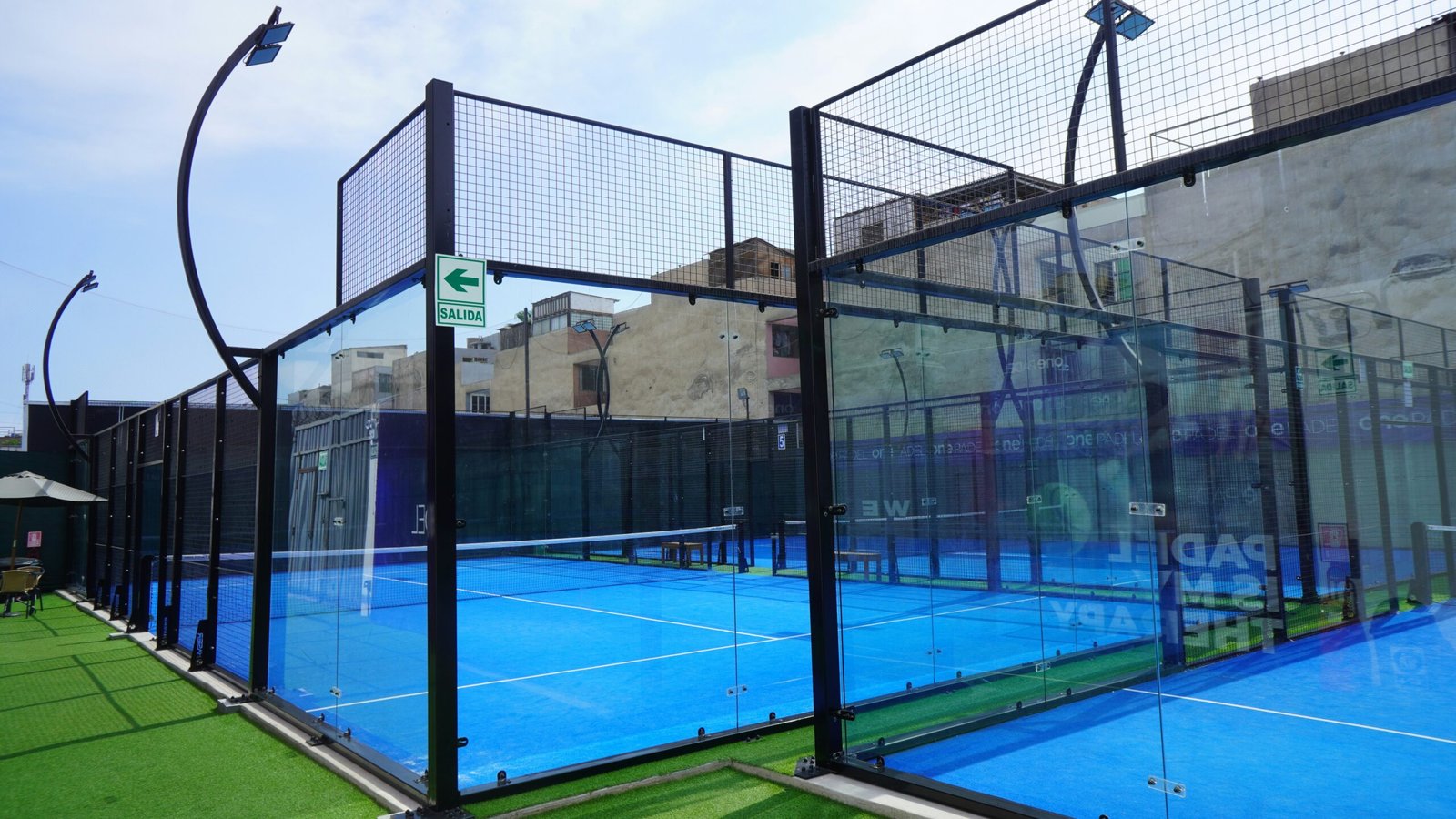
Padel Court

A Modern Padel Court

The glass walls are the sport's most iconic and defining feature

Padel was not designed in a laboratory or conceived by a sportsnfederation committee. It was invented by a man who needed to fill annawkward space in his garden — and in doing so, he gave the world absport that 30 million people now play every single week.

1969

Year padel was invented in
Acapulco, Mexico

30M+

Active padel players
worldwide as of 2025

90+

Countries with active padel
federations today

I. Acapulco, 1969: A Garden, Two Walls, and a Genius Accident

The story of padel begins not on a grand sporting stage but on a private estate in Acapulco, Mexico. Enrique Corcuera, a wealthy Mexican businessman with a passion for sport, had a practical problem: the space available at his home was simply too small for a standard tennis court. Rather than abandon the idea of an outdoor racket sport entirely, he did what any resourceful improviser would do — he built walls.

Corcuera enclosed the available space with brick and wire mesh, adjusted the rules to allow the ball to bounce off the walls, and used solid rackets instead of strung ones. The result was something entirely new: faster than squash, more social than tennis, easier to learn than either, and played as doubles almost exclusively. He gave it the name padel — likely derived from the Spanish word for paddle — and invited friends to play. Those friends invited others, and others invited more.

The genius of Corcuera’s invention was partly intentional and partly accidental. The wall element transformed rallies into collaborative spectacles, where a ball struck at an angle off the back glass could be retrieved by a partner and driven back with pace and precision. It rewarded intelligence over raw physical power, making it genuinely accessible to players of widely varying ages, fitness levels, and athletic backgrounds. Within a year, Corcuera’s court had become the social centrepiece of Acapulco’s elite.

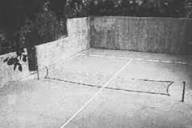
Historic padel court

Acapulco Mexico

Acapulco, Mexico — the unlikely birthplace of the world's fastest-growing racket sport. Historical archive.

II. The Spanish Spark: Alfonso de Hohenlohe and the European Arrival

Padel might have remained a charming Mexican curiosity had it not been for a chance encounter on that same estate. In 1974, Alfonso de Hohenlohe, a Spanish nobleman and prominent socialite, visited Corcuera in Acapulco and was immediately captivated by the game. He returned to Marbella — the glamorous Mediterranean resort town on Spain’s Costa del Sol — and built two padel courts at his Marbella Club.

The timing, and the location, could not have been more culturally fertile. Marbella in the 1970s was Europe’s most fashionable playground, a glittering gathering point for royalty, aristocracy, film stars, and industrialists. When Hohenlohe introduced padel to his circle, the sport did not need marketing. It had word of mouth among the most socially connected people in Europe, and it spread with remarkable speed through the continent’s leisure class.

Padel did not spread through advertising campaigns. It spread
through the most powerful force in sport: the simple, irresistible
joy of playing it.

III. Argentina: Where Padel Found Its Soul

While Spain provided padel with its European foothold, it was Argentina that gave the sport its competitive soul. The game arrived in Buenos Aires in the late 1970s and early 1980s, carried partly by the cultural and linguistic ties between Spain and Argentina, and partly by the Argentine appetite for racket sports that had already produced world-class tennis talent for decades.

Argentina’s relationship with padel was different in character from Spain’s. Where Spain initially treated it as a leisure pursuit of the affluent, Argentina democratised it rapidly. Public padel clubs proliferated in Buenos Aires and beyond. The game crossed class boundaries in a way that tennis, with its expensive equipment and court costs, had never quite managed. By the 1990s, Argentina was producing players of a technical sophistication and competitive intensity that would define the sport’s elite level for a generation.

The Argentine padel style — aggressive, technically polished, built around decisive net play and precise ball placement — became the template against which all serious padel was measured. When international competition arrived, Argentine players dominated it, and that dominance was a direct product of a grassroots culture that had embraced the sport with a depth and passion unmatched anywhere else in the world.

MX
Mexico Birthplace, 1969 — Acapulco’s gift to the world
ES
Spain
12M+ players — padel’s spiritual home since 1974
AR
Argentina
Competitive soul of the sport — home of the WPT elite
EU
Europe
Fastest-growing region — Italy, Sweden, UK booming

IV. Rules, Court, and What Makes Padel Unique

Understanding padel’s rapid global ascent requires understanding what makes it fundamentally different from every other racket sport. The court itself — 20 metres long and 10 metres wide, enclosed on all four sides by a combination of glass walls and wire mesh — is not merely a playing surface but an active participant in every rally. When a ball strikes the back glass and rebounds, the receiving player can use that rebound as a legitimate part of their return. Points are therefore not merely won by power; they are constructed by geometry, angle, and collective positioning.

The rules follow the same 15-30-40 scoring structure as tennis, and the net height is comparable, making the transition intuitive for tennis players. But the solid perforated racket — technically a bat, not a strung frame — and the lower-pressure ball produce a game that rewards touch and placement over brute force. A 60-year-old club player with excellent positioning can genuinely compete against a fitter, younger opponent who hasn’t learned to read the walls. This democratic quality is, in many coaches’ view, padel’s single most important characteristic.

A Modern Padel Court

The standard padel court: 20×10m, enclosed by glass and wire mesh.

Padel

The padel racket: solid, perforated, and entirely distinct from its tennis counterpart.

V. The Birth of Professional Padel: WPT and Global Organisation

For much of its first three decades, padel operated without a meaningful professional structure. Elite players competed in national tournaments and informal international events, but there was no unified global circuit, no consistent ranking system, and no financial framework to support a career in professional padel. That changed decisively with the establishment of the World Padel Tour (WPT) in 2005 — a professional circuit that brought standardised competition, international rankings, television coverage, and genuine prize money to the sport’s elite tier.

The WPT transformed padel’s competitive landscape in ways that closely mirrored tennis’s own Open Era transition in 1968. Suddenly, the best players in the world could compete against each other on a consistent, well-organised circuit. The quality of play rose sharply. Television audiences grew. Commercial sponsors entered. And the visibility of elite padel reached audiences who had never held a racket — and who, having watched a handful of points on screen, immediately wanted to try.

1969
Enrique Corcuera Invents Padel in Acapulco

A modified garden space and an improvised rule set produce the world's most accessible and addictive racket sport. The first court is built at his private estate.

1974
Alfonso de Hohenlohe Brings Padel to Marbella

Two courts at the Marbella Club introduce padel to Europe's social elite. The sport begins spreading through Spain's private clubs and holiday resorts.

1982
Federación Española de Pádel Founded

Spain establishes an official governing body — the first national federation dedicated to padel — formalising rules, competition, and coaching standards.

1991
First Padel World Championship

Spain hosts the inaugural World Padel Championship. Spain wins. Argentina is runner-up. A pattern that will repeat itself across the next two decades is established.

2005
World Padel Tour Established

The creation of a unified professional circuit gives the sport its competitive architecture — rankings, prize money, TV coverage, and global visibility.

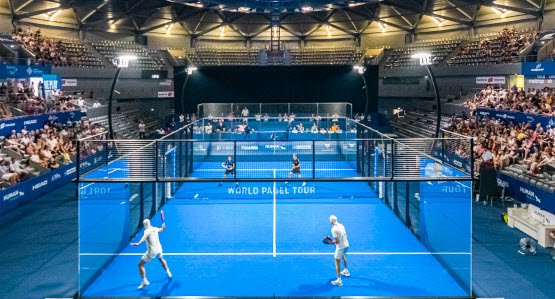
2020
The Global Explosion

Padel becomes the fastest-growing sport on earth. Courts open across the UK, USA, Scandinavia, the Middle East, and Asia. Player numbers surpass 30 million.

VI. The Champions Who Shaped the Sport

Every sport needs its defining champions — players whose excellence establishes a benchmark for what the game can look like at its best, and whose personalities give casual observers a story to follow. Padel has been blessed with several.

Fernando Belasteguín, the Argentine right-handed maestro, is the most decorated player in padel history — spending over a decade ranked number one in the world and accumulating a record of titles that may never be surpassed. His partnership with Pablo Lima, the Brazilian-born, Spanish-based player whose court coverage and technical repertoire complemented Belasteguín perfectly, produced what many consider the greatest doubles pairing the sport has ever seen. Their rivalry with the Spanish pair Juan Martín Díaz and Fernando Verdasco, and later with Ale Galán and Juan Lebrón, gave padel its most compelling narratives of the professional era.

On the women’s side, Gemma Triay and Alejandra Salazar have carved out careers of similarly exceptional longevity and technical brilliance. Triay, in particular, has been dominant in recent seasons — small in stature but extraordinary in her reading of the court, her positioning, and her composure under pressure. Her game is a masterclass in the intelligence that makes padel such a rewarding sport to watch and to coach.

Source: YouTube – Final Highlights | Tapia & Coello vs Galán & Chingotto | World Cup Pairs 2025  The Arena Kuwait 🇰🇼Agustín Tapia / Arturo Coello vs Alejandro Galán / Federico Chingotto : FIP World Cup Pairs 2025 — Final …

VII. Why Padel Is Growing Faster Than Any Other Sport

The statistics are striking. In 2010, there were an estimated 3 million padel players worldwide and courts existed in only a handful of countries. By 2025, that figure had reached 30 million players across more than 90 nations. No racket sport — no team sport — has grown at anything approaching this pace over the same period. The question of why padel has grown so explosively deserves a serious answer, because the answer illuminates something important about what people are looking for in leisure sport today.

The first reason is accessibility. A beginner can pick up a padel racket and have a genuinely enjoyable game within 20 minutes. The wall means the ball stays in play longer; longer rallies mean more exercise, more engagement, and more immediate satisfaction. Compare this with tennis, where a beginner’s first session often consists largely of chasing missed balls around an empty court. Padel is fun from the very first point, and that first session almost always produces a second.

The second reason is sociability. Padel is played exclusively as doubles — four people on a court at all times, sharing the experience. It is structured conversation. Post-match socialising is built into padel culture in a way that few individual sports can replicate. Across Spain, Argentina, Sweden, and Italy, the padel club has become a social institution as much as a sporting venue.

The third reason is timing. Padel’s global boom coincided with a widespread public reappraisal of exercise, wellbeing, and social connection that followed the pandemic years. People emerged from lockdowns looking not merely for fitness but for community, for regular reasons to leave the house, for activities that combined physical activity with human contact. Padel delivered all three simultaneously, and the timing could not have been more propitious.

A beginner can have a genuinely enjoyable game within twenty
minutes. That first session almost always produces a second —
and then a third, and a fourth.

VIII. Padel's Future: Olympic Ambition and Coaching's New Frontier

As padel enters the second half of the 2020s, the sport’s leadership is focused on two strategic priorities: Olympic inclusion and the professionalisation of coaching. The International Padel Federation has been working toward Olympic recognition for several years, and the case for inclusion grows more compelling with each year’s growth data. A padel debut at the 2032 Brisbane or 2036 Games would represent the sport’s definitive arrival on the global mainstream stage.

The coaching dimension is equally significant — and particularly relevant for a platform like CoachConnect. Padel’s explosive growth has created an urgent, worldwide demand for qualified coaches that currently outstrips supply in almost every country outside Spain and Argentina. Clubs are opening faster than the coaching pipeline can fill them. The players are there; the courts are there; the appetite is undeniable. What is needed now, across every padel-growing nation, is a generation of knowledgeable, professionally trained coaches who understand both the technical demands of the game and the pedagogical skills needed to make it accessible to players of every level.

The history of padel is, ultimately, a story about what happens when a sport perfectly matches its cultural moment. Enrique Corcuera didn’t set out to invent a global phenomenon. He built two walls to solve a practical problem and created something that would outlast him by centuries. From Acapulco to Marbella, from Buenos Aires to London and Stockholm and Dubai — the walls are going up, and the rallies are getting longer, and the sport shows every sign of being only just at the beginning of its extraordinary story.

WRITTEN BY

Picture of SportCoachHub Editorial

SportCoachHub Editorial

Igor flego

I am a professional tennis trainer and a former ATP and Davis Cup player. I started playing tennis when I was 7 years old, together with my brother, at a tennis school in my town, Opatija, Croatia. Since then, I have remained faithful to tennis my entire life until now. My relationship with coaching began in my early twenties, and since then I have coached many different players from beginners, both female and male, children, adults, competitors and professionals. During all these years coaching other tennis players, I have gained experience that I will gladly share with a wider audience. This prompted me to start writing tennis and other sports blogs on this portal.

REFERENCES & FURTHER READING

  1. International Padel Federation (FIP). History of Padel. padelfip.com — Official historical record and governance documentation.
  2. Federación Española de Pádel. Historia del Pádel en España. padelfederacion.es — Authoritative Spanish-language account of the sport’s national development.
  3. World Padel Tour. WPT Official Historical Records. worldpadeltour.com — Professional circuit history, ranking archives, and player profiles.
  4. Sport England / European Padel Federation. Padel Growth Statistics 2020–2025. Market research reports on court construction, player registration, and demographic trends.
  5. García Coll, Javier. El Pádel: Historia, Técnica y Táctica. Ediciones Tutor, 2018. — Comprehensive Spanish-language technical and historical guide to the sport.
  6. Bray, Adam. The Complete Padel Bible. Independently published, 2022. — English-language overview of rules, technique, and the sport’s global growth narrative.
  7. International Olympic Committee. Olympic Programme Commission Reports. olympics.com — For current status of padel’s IOC recognition pathway.
  8. Statista Sport Research. Number of Padel Players Worldwide 2010–2025. statista.com — Player registration and participation data cited throughout this article.