V. The Birth of Professional Padel: WPT and Global Organisation
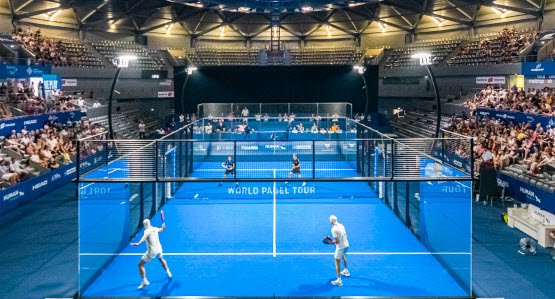
For much of its first three decades, padel operated without a meaningful professional structure. Elite players competed in national tournaments and informal international events, but there was no unified global circuit, no consistent ranking system, and no financial framework to support a career in professional padel. That changed decisively with the establishment of the World Padel Tour (WPT) in 2005 — a professional circuit that brought standardised competition, international rankings, television coverage, and genuine prize money to the sport’s elite tier.
The WPT transformed padel’s competitive landscape in ways that closely mirrored tennis’s own Open Era transition in 1968. Suddenly, the best players in the world could compete against each other on a consistent, well-organised circuit. The quality of play rose sharply. Television audiences grew. Commercial sponsors entered. And the visibility of elite padel reached audiences who had never held a racket — and who, having watched a handful of points on screen, immediately wanted to try.
VI. The Champions Who Shaped the Sport
Every sport needs its defining champions — players whose excellence establishes a benchmark for what the game can look like at its best, and whose personalities give casual observers a story to follow. Padel has been blessed with several.
Fernando Belasteguín, the Argentine right-handed maestro, is the most decorated player in padel history — spending over a decade ranked number one in the world and accumulating a record of titles that may never be surpassed. His partnership with Pablo Lima, the Brazilian-born, Spanish-based player whose court coverage and technical repertoire complemented Belasteguín perfectly, produced what many consider the greatest doubles pairing the sport has ever seen. Their rivalry with the Spanish pair Juan Martín Díaz and Fernando Verdasco, and later with Ale Galán and Juan Lebrón, gave padel its most compelling narratives of the professional era.
On the women’s side, Gemma Triay and Alejandra Salazar have carved out careers of similarly exceptional longevity and technical brilliance. Triay, in particular, has been dominant in recent seasons — small in stature but extraordinary in her reading of the court, her positioning, and her composure under pressure. Her game is a masterclass in the intelligence that makes padel such a rewarding sport to watch and to coach.
Source: YouTube – Final Highlights | Tapia & Coello vs Galán & Chingotto | World Cup Pairs 2025 The Arena Kuwait 🇰🇼Agustín Tapia / Arturo Coello vs Alejandro Galán / Federico Chingotto : FIP World Cup Pairs 2025 — Final …
VII. Why Padel Is Growing Faster Than Any Other Sport
The statistics are striking. In 2010, there were an estimated 3 million padel players worldwide and courts existed in only a handful of countries. By 2025, that figure had reached 30 million players across more than 90 nations. No racket sport — no team sport — has grown at anything approaching this pace over the same period. The question of why padel has grown so explosively deserves a serious answer, because the answer illuminates something important about what people are looking for in leisure sport today.
The first reason is accessibility. A beginner can pick up a padel racket and have a genuinely enjoyable game within 20 minutes. The wall means the ball stays in play longer; longer rallies mean more exercise, more engagement, and more immediate satisfaction. Compare this with tennis, where a beginner’s first session often consists largely of chasing missed balls around an empty court. Padel is fun from the very first point, and that first session almost always produces a second.
The second reason is sociability. Padel is played exclusively as doubles — four people on a court at all times, sharing the experience. It is structured conversation. Post-match socialising is built into padel culture in a way that few individual sports can replicate. Across Spain, Argentina, Sweden, and Italy, the padel club has become a social institution as much as a sporting venue.
The third reason is timing. Padel’s global boom coincided with a widespread public reappraisal of exercise, wellbeing, and social connection that followed the pandemic years. People emerged from lockdowns looking not merely for fitness but for community, for regular reasons to leave the house, for activities that combined physical activity with human contact. Padel delivered all three simultaneously, and the timing could not have been more propitious.
A beginner can have a genuinely enjoyable game within twenty
minutes. That first session almost always produces a second —
and then a third, and a fourth.
VIII. Padel's Future: Olympic Ambition and Coaching's New Frontier
As padel enters the second half of the 2020s, the sport’s leadership is focused on two strategic priorities: Olympic inclusion and the professionalisation of coaching. The International Padel Federation has been working toward Olympic recognition for several years, and the case for inclusion grows more compelling with each year’s growth data. A padel debut at the 2032 Brisbane or 2036 Games would represent the sport’s definitive arrival on the global mainstream stage.
The coaching dimension is equally significant — and particularly relevant for a platform like CoachConnect. Padel’s explosive growth has created an urgent, worldwide demand for qualified coaches that currently outstrips supply in almost every country outside Spain and Argentina. Clubs are opening faster than the coaching pipeline can fill them. The players are there; the courts are there; the appetite is undeniable. What is needed now, across every padel-growing nation, is a generation of knowledgeable, professionally trained coaches who understand both the technical demands of the game and the pedagogical skills needed to make it accessible to players of every level.
The history of padel is, ultimately, a story about what happens when a sport perfectly matches its cultural moment. Enrique Corcuera didn’t set out to invent a global phenomenon. He built two walls to solve a practical problem and created something that would outlast him by centuries. From Acapulco to Marbella, from Buenos Aires to London and Stockholm and Dubai — the walls are going up, and the rallies are getting longer, and the sport shows every sign of being only just at the beginning of its extraordinary story.
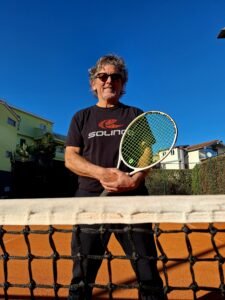
Born and raised in Opatija, Croatia, Igor picked up a racket at age seven alongside his brother at the local tennis school — and never put it down. A former ATP and Davis Cup competitor, he has spent decades on both sides of the net: first as a player chasing titles, then as a coach shaping players of every level — beginners and professionals, children and adults, women and men. That lifetime of accumulated experience — the wins, the losses, the lessons learned on clay, grass, and hard courts — is what now fuels this portal. Built for coaches, employers, and athletes, it is his way of giving the game back to the community that gave him everything.
REFERENCES & FURTHER READING
- International Padel Federation (FIP). History of Padel. padelfip.com — Official historical record and governance documentation.
- Federación Española de Pádel. Historia del Pádel en España. padelfederacion.es — Authoritative Spanish-language account of the sport’s national development.
- World Padel Tour. WPT Official Historical Records. worldpadeltour.com — Professional circuit history, ranking archives, and player profiles.
- Sport England / European Padel Federation. Padel Growth Statistics 2020–2025. Market research reports on court construction, player registration, and demographic trends.
- García Coll, Javier. El Pádel: Historia, Técnica y Táctica. Ediciones Tutor, 2018. — Comprehensive Spanish-language technical and historical guide to the sport.
- Bray, Adam. The Complete Padel Bible. Independently published, 2022. — English-language overview of rules, technique, and the sport’s global growth narrative.
- International Olympic Committee. Olympic Programme Commission Reports. olympics.com — For current status of padel’s IOC recognition pathway.
- Statista Sport Research. Number of Padel Players Worldwide 2010–2025. statista.com — Player registration and participation data cited throughout this article.