
If you have been thinking about starting a fitness and conditioning program — but keep putting it off — this article is for you. Fitness and conditioning training is not about aesthetics, punishment, or elite athleticism. It is about building a body and mind capable of living fully: moving well, performing better, resisting disease, and ageing on your own terms. The evidence is overwhelming and the benefits begin from your very first session.
What Is Fitness and Conditioning Training?
Before diving into the reasons to start, it helps to be precise about what fitness and conditioning actually means. The term covers two interrelated pillars of physical development:
Fitness refers to your body's overall physical capacity — cardiovascular endurance, muscular strength, flexibility, balance, and body composition. Conditioning refers to the systematic process of improving these capacities through structured, progressive training. Together, a fitness and conditioning program improves how efficiently your body moves, recovers, and performs under physical demand.
A well-designed conditioning workout typically combines resistance training (using weights, bodyweight, or resistance bands), cardiovascular exercise (running, rowing, cycling, or HIIT protocols), and mobility or recovery work. The goal is not specialisation in any single quality but the development of a broadly capable, resilient body.[1]
The Health Case: What Science Actually Says
Cardiovascular Health and Longevity
The cardiovascular benefits of regular fitness training are among the most robustly documented findings in all of medical science. A landmark 2022 meta-analysis in the British Journal of Sports Medicine — drawing on data from more than 30 million person-years of follow-up — found that adults who met the WHO's recommended 150 minutes per week of moderate-intensity exercise had a 35% lower risk of all-cause mortality compared to sedentary individuals, and a 46% lower risk of cardiovascular disease.[2]
Those who additionally incorporated strength training — two or more sessions per week — showed further risk reductions beyond those achieved by cardio alone. The message is unambiguous: a combined fitness and conditioning approach, blending aerobic exercise with resistance training, produces outcomes superior to either modality alone.
"Physical inactivity is the fourth-leading risk factor for global mortality. Conversely, regular fitness and conditioning activity is associated with dose-dependent reductions in cardiovascular disease, type 2 diabetes, and multiple cancers."— World Health Organization, Global Action Plan on Physical Activity 2018–2030
Metabolic Health and Body Composition
One of the most powerful effects of a structured fitness and conditioning program is its impact on metabolic health. Resistance training builds lean muscle mass, which is metabolically active tissue — meaning it burns calories even at rest. Every kilogram of added muscle increases your basal metabolic rate by approximately 13–20 kcal per day.[3] Over months and years, this metabolic dividend fundamentally shifts your body's ability to manage weight, regulate blood sugar, and process dietary fat.
Studies of adults who adopt regular strength training show consistent improvements in insulin sensitivity, HbA1c levels (a key diabetes marker), and lipid profiles — reductions in LDL cholesterol and triglycerides alongside increases in protective HDL cholesterol — independent of changes in body weight.[4] You do not need to lose weight to reap these metabolic benefits. You need to move with intention and progressively increase the demands you place on your body.
Bone Density and Musculoskeletal Health
After the age of 30, adults who do not engage in regular resistance-based conditioning training lose approximately 3–8% of their muscle mass per decade — a process called sarcopenia — while simultaneously losing bone mineral density at a rate that accelerates sharply after 50, particularly in women.[5] The consequences are profound: reduced physical capability, increased fall risk, greater fragility fracture risk, and diminished quality of life.
Resistance training is the most effective non-pharmacological intervention known for preserving and rebuilding both muscle mass and bone density across the lifespan. Even adults in their seventies who begin strength and conditioning training show measurable gains in muscle mass and bone mineral density within 8–12 weeks.[6] The message is stark: the best time to start was 20 years ago. The second best time is now.
Regular conditioning workouts strengthen the heart muscle, reduce resting heart rate, and significantly lower the risk of heart disease, stroke, and hypertension.
Progressive strength training builds lean mass, increases power output, and preserves functional independence as you age — the single best anti-ageing investment.
Exercise-induced neurochemical changes — elevated BDNF, endorphins, and dopamine — produce clinically significant reductions in depression and anxiety.
Fitness and conditioning training improves insulin sensitivity, regulates blood sugar, and shifts body composition in ways that dramatically reduce type 2 diabetes risk.
Physically active adults consistently report shorter sleep latency, longer slow-wave sleep stages, and better subjective sleep quality than their sedentary counterparts.
Combined aerobic and strength conditioning is associated with up to 7 additional years of healthy life expectancy, independent of baseline health status.
Fitness, Conditioning, and Mental Health
The mental health benefits of physical fitness training are as well-evidenced as the physical ones — and for many people, they are the primary reason they keep returning to the gym, track, or training ground week after week.
A 2023 meta-analysis in the British Medical Journal examined 97 systematic reviews and 1,039 trials involving more than 128,000 participants, and concluded that exercise was 1.5 times more effective than antidepressant medication or cognitive behavioural therapy as a treatment for depression and anxiety, with the strongest effects seen in structured, supervised training programmes.[7]
The neurobiological mechanisms are well understood. Aerobic fitness training increases circulating levels of brain-derived neurotrophic factor (BDNF), a protein that promotes neurogenesis — the growth of new neurons — particularly in the hippocampus, the brain region most critical for learning and memory. Resistance training, meanwhile, produces elevations in testosterone, growth hormone, and IGF-1 that support cognitive function and mood regulation.[8]
Beyond neurochemistry, there is the psychological dimension: the progressive nature of fitness and conditioning training — setting goals, measuring progress, overcoming resistance — builds self-efficacy and disciplined confidence that transfers to every other domain of life. People who train consistently are, on average, more productive at work, more emotionally regulated, and more capable of sustained effort in demanding situations.[9]
Your First Fitness and Conditioning Program: A Beginner's Plan
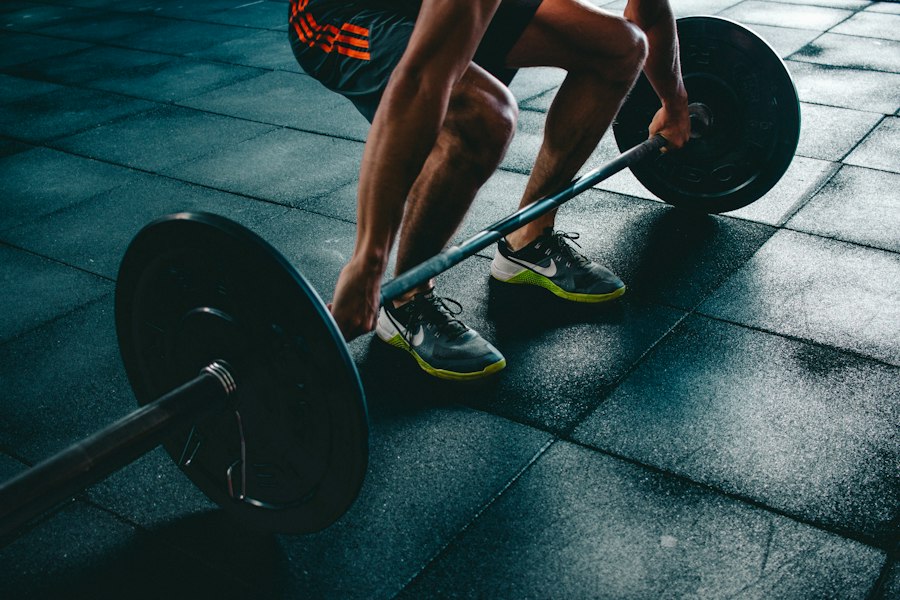
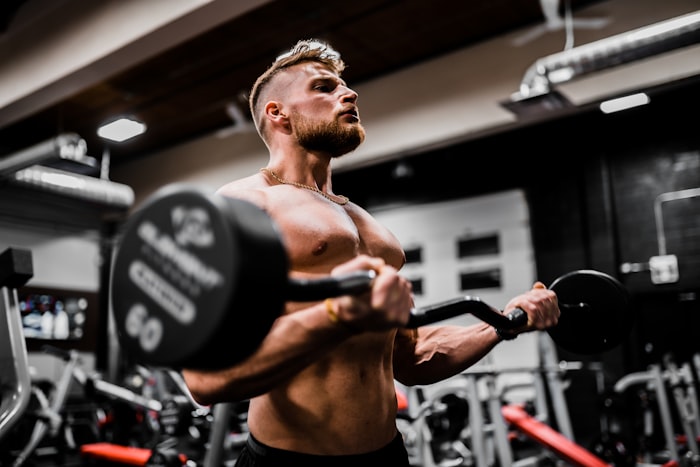
Starting a fitness and conditioning routine does not require expensive equipment, a gym membership, or prior experience. What it requires is a plan and the willingness to show up. Below is a beginner-friendly three-day weekly workout routine grounded in exercise science principles — progressive overload, movement variety, and adequate recovery.
| Day | Focus | Key Exercises | Duration |
|---|---|---|---|
| Mon | Strength — Lower Body | Goblet squat, Romanian deadlift, walking lunge, calf raise | 50 min |
| Tue | Active Recovery | 20 min walk, mobility stretching, foam rolling | 25 min |
| Wed | Conditioning — Full Body | Rowing / cycling intervals, kettlebell swings, push-ups, plank | 45 min |
| Thu | Rest | Full rest or gentle walking | — |
| Fri | Strength — Upper Body | Dumbbell press, bent-over row, shoulder press, bicep curl, tricep dip | 50 min |
| Sat | Cardio — Endurance | 30–40 min steady-state run, cycle, or swim | 40 min |
| Sun | Rest | Full rest — recovery is where adaptation happens | — |
The key principle of any effective conditioning program for beginners is progressive overload: gradually increasing the weight, reps, or difficulty of exercises over time. Aim to add a small amount of load or volume every one to two weeks. This progressive challenge is what signals your body to adapt — building muscle, improving cardiovascular capacity, and enhancing overall physical fitness.[10]
FAQ: Fitness and Conditioning for Beginners
Fitness and Conditioning as a Life Practice
The most important shift in perspective for anyone beginning a fitness and conditioning journey is this: training is not a phase you go through, a programme you complete, or a punishment for poor choices. It is a practice — ongoing, evolving, and lifelong.
The people who derive the most profound benefits from physical fitness training are not those who train hardest. They are those who train most consistently, most intelligently, and with genuine enjoyment. Finding conditioning formats you genuinely like — whether that is barbell lifting, functional training, group HIIT classes, cycling, swimming, martial arts, or sports like tennis and padel — is more important than optimising any individual workout parameter.[11]
Research on exercise adherence consistently finds that enjoyment is the single strongest predictor of long-term consistency — stronger than results, social accountability, or financial investment in a gym. When you find the fitness and conditioning activities that make you feel alive, you stop thinking about exercise as something you have to do and start experiencing it as something you want to do.[12]
Start where you are. Use what you have. Do what you can. Then add a little more next week. That is the entire philosophy of fitness and conditioning training distilled to its essence — and it works reliably, for every body, at every age, from every starting point.
References & Further Reading
- American College of Sports Medicine. ACSM's Guidelines for Exercise Testing and Prescription. 11th ed. Philadelphia: Wolters Kluwer, 2021.
- Stamatakis, E. et al. "Vigorous physical activity and all-cause and cardiovascular disease mortality." British Journal of Sports Medicine, 2022; 56(13):755–761.
- Wolfe, R.R. "The underappreciated role of muscle in health and disease." The American Journal of Clinical Nutrition, 2006; 84(3):475–482.
- Strasser, B. & Schobersberger, W. "Evidence for resistance training as a treatment therapy in obesity." Journal of Obesity, 2011; 2011:482564.
- Cruz-Jentoft, A.J. et al. "Sarcopenia: revised European consensus on definition and diagnosis." Age and Ageing, 2019; 48(1):16–31.
- Peterson, M.D. et al. "Resistance exercise for muscular strength in older adults." Ageing Research Reviews, 2011; 10(3):394–403.
- Singh, B. et al. "Effectiveness of physical activity interventions for improving depression, anxiety and distress." British Journal of Sports Medicine, 2023; 57(18):1203–1209.
- Cotman, C.W. & Berchtold, N.C. "Exercise: a behavioral intervention to enhance brain health and plasticity." Trends in Neurosciences, 2002; 25(6):295–301.
- Seligman, M.E.P. Flourish: A Visionary New Understanding of Happiness and Well-being. New York: Free Press, 2011.
- Schoenfeld, B.J. et al. "Resistance Training Volume Enhances Muscle Hypertrophy." Journal of Strength and Conditioning Research, 2019; 33(7):1732–1740.
- Biddle, S.J.H. & Asare, M. "Physical activity and mental health in children and adolescents." British Journal of Sports Medicine, 2011; 45(11):886–895.
- Ryan, R.M. et al. "Intrinsic motivation and exercise adherence." International Journal of Sport Psychology, 1997; 28(4):335–354.